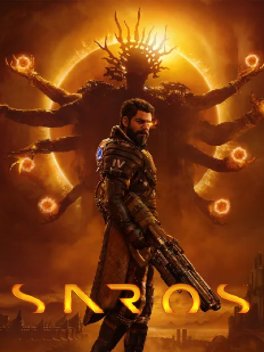
Saros Reviews
Check out Saros Review Scores from trusted Critics below. With 52 reviews on CriticDB, Saros has a score of:

Sublime gameplay and a stellar central performance make Saros one of PS5’s most memorable first-party games…

Advancements in progression, narrative delivery, and player engagement, as well as refinements made to a near-perfect set of gameplay fundamentals, see Saros eclipse its predecessor and ascend to a throne above all others in the genre.
Housemarque is back with yet another fantastic fast-paced third person shooter. Saros builds on Returnal, delivering deeper and more enjoyable gameplay, as well as a new permanent progression system and modifiers which allow you to tweak the difficulty to your preferences. All in all, it's Housemarque's best game yet.

Saros on PS5 isn't just a worthy spiritual successor to Returnal, but one of the best PlayStation exclusives in a good while. Read our review.

As a follow up to Returnal, Saros is excellent. It builds on the foundations of Selene’s adventure and is a sensational slice of bullet-hell shooter goodness.

Saros is a masterpiece. Not only does Housemarque successfully build on the foundations of Returnal, but it refines them to create a more accessible experience without losing its core principles. The combat system encourages aggression, making each encounter a tense and enthralling battle where risk-taking is rewarded. While the story is much more present than its predecessor, it never interrupts the action, complementing the deep and complex systems. With more options to personalise your adventure, this is not just a Game of the Year contender, but one of the defining games of its generation.

Saros is an amazing bullet hell game created by Housemarque that you definitely deserve to play, owing to its amazing gameplay and graphics.

I’ll be honest: I am getting really tired of the Playstation Studios exclusive pattern. Given how Sony always aims for the most cinematic, featured-bloated, and as a result, expensive experiences, most of their games started to feel quite samey as a result. They need to feature a ton of (safe) mechanics and content to appease to the highest amount of people at once, whilst also featuring somewhat predictable audiovisual styles and writing patterns that instantly turn them into award darling...

Housemarque doesn’t just refine Returnal—they rebuild the roguelike into something more forgiving, more brutal, and, somehow, more addictive.

SAROS is head and shoulders above Returnal, which was already a stellar reinvention of the bullet-hell genre, thanks to a richer story, tougher enemies and gameplay systems that tailor the game to the player.

Saros is Housemarque at its best. It nails the roguelike formula, with each run feeling completely different than what came before thanks to changing areas and a variety of weapons. The story grips you and doesn’t let go, with Rahul Kohli’s fantastic performance at the heart of it.
Saros is the latest effort from the Finnish team Housemaque, who ushered in the PS5 generation with Returnal: have they managed to outdo themselves?

After the incredible Returnal, Housemarque returns with SAROS and it is definitely their best game to date so get ready for intense action.

Moving, shooting, improving (both in stats and skill), winning, and even losing is an unequivocal joy, and I only wish I could write this final sentence faster so I can hurry up and get back to planet Carcosa and attempt another run.

Set on the planet Carcosa under the threat of an ominous eclipse, take on the role of Arjun Devraj, a powerful Soltari Enforcer searching for answers on a lost off-world colony.

Saros mixes roguelike elements with its third-person shooter core to create a bullet hell experience with gorgeous, accessible chaos.

Developer Housemarque picks up where it left off with Returnal in Saros, a similarly fast-paced third-person shooter with roguelite progression wrapped in a deviously cozy cosmic horror blanket. If you loved Returnal as much as I did, you’ll feel right at home in Saros’s horrifying alien world, even if its overall difficulty feels just a notch or two lower here. Still, its permanent progression systems make for a compelling gameplay loop, and the narrative’s sci-fi take on horror classic The King in Yellow makes for a real virtual page-turner.

SAROS is a fantastic experience from beginning to end. The narrative delivers a brilliant cosmic horror narrative with a great cast of characters, brilliant performances, a rich and intriguing world, and incredible representation thanks to a great South Asian protagonist. Further, the gameplay is a non-stop thrill ride throughout, that never feels too difficult despite the occasional spike in challenge. While there are some issues with the post-game and build options, this is a must-play for ...

Saros, starring Rahul Kohli, is the latest game from Housemarque and Sony Interactive Entertainment. I’d be lying if I said I wasn’t initially skeptical about this newest PlayStation first-party release. From its reveal, I kept coming back to the same question: why isn’t this just called Returnal 2? Everything, from…

Five years after Returnal, the Finnish developers at Housemarque are back with SAROS, a new PS5 exclusive expected on April 30, 2026. Here is our review of the game.

We review Saros, the latest PlayStation game. Is it worth your attention? Read on for our impressions.
Housemarque’s Saros feels like a proper evolution of Returnal’s mechanics. It’s bold, it’s exciting, thrilling even. Each time Arjun heads out in search of answers yields clues to the truth behind Carcosa and those burdened by its existence.

With 2021’s Returnal, Housemarque reintroduced itself as a studio ready to shake up the modern AAA landscape. Returnal instantly placed them on my shortlist of studios to watch, its balance of traditional action and roguelite elements making for a challenging sci-fi experience like no other. Five years and one PlayStation acquisition later, Housemarque has returned to the world of sci-fi bullet hells with Saros, a game that smartly iterates on its spiritual predecessor.

Saros is an incredible step up over Returnal in every way imaginable. The rogue-lite progression and quality-of-life improvements are great, but it's the more complex bullet-hell system, bolstered by a compelling world and some masterful level design, that truly elevates it.

A surprisingly conservative follow-up to Returnal but the transcendent third person action is so well orchestrated that qualms about the storytelling and lack of innovation seem like only minor concerns in comparison.

Saros is a relentless, exciting and demanding rogue-lite shooter that combines cinematic spectacle with tight bullet-hell combat. It’s a marvellous follow-up to Returnal, that retains the best bits of its predecessor while sanding down its (minor) rough edges. It pulls very few punches, but will have you saying “one more run” on a loop.

Did Returnal bother you a little? A new challenge is here! Finnish studio Housemarque brings you the roguelike action game Saros.


Housemarque follows up Returnal with PS5 exclusive Saros, another wildly entertaining and action-packed third-person shooter.

Saros might be following in the footsteps of Returnal in many ways, but this is very much a standalone experience, telling a new story within another original sci-fi setting, building out its third person bullet hell action with its own particular twists, and a compelling new roguelite narrative to unfurl.

So here is the Saros review! How does the game compare to its predecessor Returnal, and is it worth playing? You can read all about it in our extensive...

As one of Sony's major first-party releases this year, "Saros Cycle" will bring players who enjoy action shooting a thrilling alien adventure.

Housemarque returns with Saros: fast-paced action on a hostile planet, packed with strategic choices, freedom, and a more central narrative.

George takes a look at the next game from developer Housemarque, the bullet-hell roguelike Saros. How does it stack up? Here is our review.

Housemarque has brought us to a new unforgiven alien world filled with time-looping shenanigans and madness of the yellow king in Saros.

Saros is the latest title from one of my favorite studios, Housemarque. This spiritual successor to 2021’s Returnal has amazing gameplay, looks fantastic,

A challenging yet surprisingly welcoming third-person shooter with the heart of a shmup, with a story that doesn't quite land with enough punch.

Question your sanity in this title of exceptional shootouts whose structure ultimately fell short.

An unforgiving alien planet, brutal bullet-hell combat, and a mystery slowly eating away at reality - Housemarque came back with another game full of chaotic combat and eerie atmosphere that demands your full attention.

Saros is one of PlayStation's most confident exclusives yet

Returnal was a bold statement from a humble Finnish team in 2021. After decades of smaller, arcade-oriented projects, it showed just what Housemarque was capable of when reaching for the stars. Now, in following it up, the devs have proven it was far from a fluke. While rough around the edges at launch, SAROS shows that when afforded the opportunity, they can shine brighter than even Carcosa’s blazing sun.

Saros’ levels are beautifully eerie, with the best and weirdest vistas saved for its second half. Character and enemy design are generally excellent as well, though NPC conversations can appear disjointed, with underwhelming mocap outside its gorgeous proper cutscenes. That doesn’t distract from the game’s many superb voice performances, but it can get noticeably awkward at times. Returnal’s Jane Perry was transcendent, but her voice had to carry that entire game, so it's gratifying that Saros' ensemble cast, led by Rahul Kohli as Arjun is exceptional across the board, well beyond the quality we tend to find in our action fare (and we even get Perry’s return in a minor role as the beleaguered Commander Sheridan).

Saros' narrative often feels at odds with the kind of experience it wants to be, but there's no denying this is another top-tier action game from Housemarque.

Here's our review of Saros, Housemarque's spiritual successor to Returnal!

Saros is the spiritual successor to Housemarque's beloved fan‑favourite roguelike shooter Returnal. The game replicates several of the elements of the

From the very first minutes of gameplay, it became clear to me that Saros was created as a response to the most vocal criticisms leveled at Returnal. But isn't that a bit too safe a approach to creating a sequel?

Lexi Luddy travels to Carcosa, a planet that's trying to kill you at every moment in the Gamer Guides review for Saros.
Saros is a good game, and I need to be clear about that. The sheer speed and kinetic energy of the combat, the visual design, and the moreish nature of the roguelike loop come together to make something that is, by any objective measure, well-made and something that consumers clearly like to play. But on the other side of the coin, I really can’t stand Saros because I look at it and all I see is the cynical Sony studio formula slapped over the top of what was, a half-decade ago, a pretty fine game. In fact, I think I’ll dust Returnal off for a replay.

Saros' ambitions aren't always fulfilled, but Housemarque's fluid action still bangs.

Saros stands tall as a bold evolution for Housemarque, proving the studio wasn’t content with simply recreating the magic of Returnal. Instead, it refines and expands on it in meaningful ways by pairing its punishing bullet-hell combat with smarter progression systems, broader accessibility ideas, and a narrative that trades clarity for intrigue. Arjun’s relentless, emotionally driven journey through Carcosa gives the experience a fiery contrast to Returnal’s isolation, while the “come back stronger” philosophy is felt in every run, every failure, and every hard-earned breakthrough back at The Passage. It can be overwhelming and at times unforgiving, but that tension is exactly what makes its victories so intoxicating. And by turning struggle into growth and persistence into something deeply rewarding, Saros cements itself as a serious GOTY contender and a lot more than just a sequel in spirit.

SAROS ultimately succeeds not by abandoning Housemarque’s identity, but by reshaping it into something broader without losing its edge. Its oppressive, eclipse-drenched world remains consistently mesmerizing and deeply unsettling. Meanwhile, the smooth combat gameplay stays brutal and dazzling, yet simultaneously highly addictive, as progression gradually transforms the narrative into a psychologically charged odyssey – one where every death feeds persistence rather than defeat. For some, SAROS‘ endless eclipse cycles will become utterly consuming; for others, Carcosa’s blackened sun m…

Returnal developer Housemarque returns with Saros, a PS5-exclusive shooter that launches on April 30th.